
Online Health Informatics Degrees: High-Demand Tech Careers
por Morgans · 15 de setembro de 2026 · 6 min de leitura
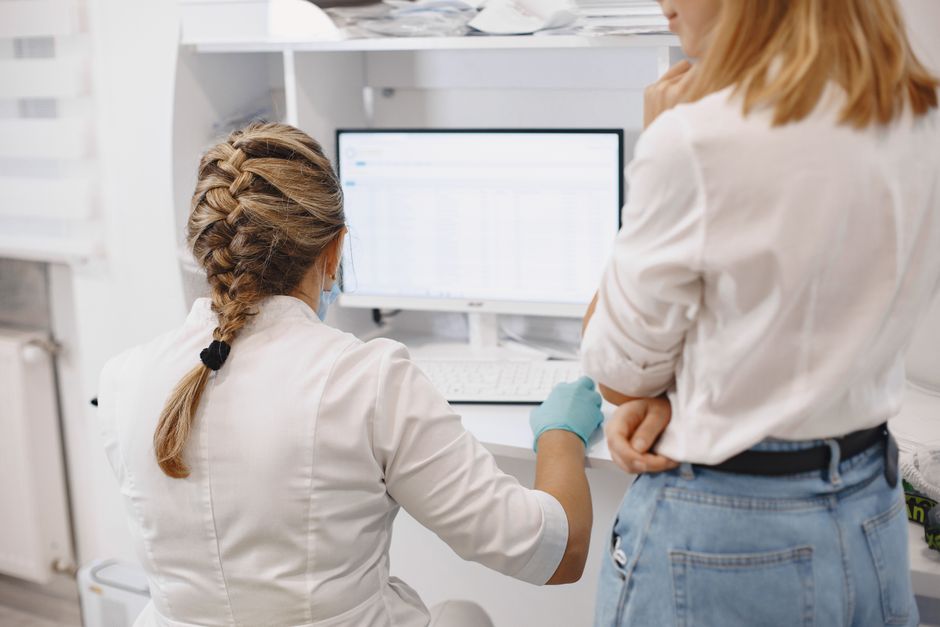
For centuries, clinical medicine relied almost entirely on a physician's trained eyes, careful listening, and paper charts filed away in dusty metal cabinets. But in recent decades, a quiet revolution reshaped how healthcare is delivered. Medicine ceased to be solely a biological discipline; it became an information science.
At the center of this transformation sits health informatics. It is an extraordinary field where information technology, data analytics, and healthcare delivery intersect. For those seeking a dynamic career path with deep societal impact, earning a degree in health informatics offers the ultimate bridge between a passion for tech and a desire to improve lives.
The Unseen Backbone of Modern Healthcare
When you step into a modern hospital, it is easy to focus on the immediate tools of care: stethoscopes, MRI scanners, and surgical suites. Yet an invisible engine operates continuously in the background. Every patient leaves behind a digital trail of data, from allergy records to intricate laboratory results.
When this data stays trapped in isolated silos, care becomes inefficient and prone to errors. Health informatics solves this exact challenge. Specialists in this domain design, deploy, and manage the underlying systems that keep medical information moving smoothly.
The true breakthrough in modern medicine lies not only in new pharmaceutical drugs, but in delivering the right information to clinicians at the exact moment of decision.
As a result, health informatics professionals rarely stand at the bedside with a stethoscope. Their mission is to build the digital architecture that enables clinical teams to make faster, safer, and smarter decisions.
What Health Informatics Actually Entails
An undergraduate program in this discipline combines computer science, quantitative analysis, and healthcare administration. The objective is to cultivate hybrid professionals who can converse as easily with software developers as with medical directors.
A solid background in science, technology, engineering, and mathematics provides a strong foundation. Throughout the degree, students encounter core coursework designed to build practical industry skills.
Health Data Analysis and Quality Improvement
In this area of study, students discover how clinical data is collected, audited, and interpreted. The focus is on turning raw numbers into actionable strategies that improve overall patient outcomes.
Additionally, students examine regulatory compliance standards. Protecting patient privacy and ensuring data security remain top priorities across all medical networks.
Medical Terminology and Coding
Healthcare operates on a specialized, intricate vocabulary. Courses in coding teach students how to translate clinical diagnoses and procedures into standardized alphanumeric codes used worldwide.
This training incorporates essential ethical discussions, analyzing how precise medical coding influences billing accuracy and clinical reporting.
Legal Guidelines and Healthcare Ethics
Handling sensitive health data carries significant legal responsibility. Coursework covers statutory privacy frameworks and trains students to navigate complex compliance issues whenever they arise.
Healthcare IT Strategy and Resource Management
Rather than viewing software in isolation, students learn to manage IT infrastructure as a core organizational asset. The curriculum emphasizes aligning technology initiatives with broader healthcare goals.
Financial Practices and Reimbursement Systems
The healthcare industry features unique financial structures. Modules dedicated to finance examine hospital accounting, insurance claims, and multi-layered reimbursement models.
The Mechanics of an Online Curriculum
Most online bachelor's programs in health informatics require approximately 120 academic credits. Enrolling on a full-time basis typically leads to graduation in about four years.
However, distance learning introduces flexible pathways. Many universities now offer accelerated options, allowing motivated students to finish their coursework in significantly less time.
A common question involves hands-on practical training. Although learning occurs remotely, practical lab work and experiential learning remain critical components of the degree.
Modern platforms utilize virtual lab environments to simulate real-world electronic health record systems. This enables students to satisfy practical requirements without needing to step foot on a physical campus.
Choosing the Right Path: Format, Cost, and Accreditation
Selecting the right online degree program requires evaluating several key operational factors. There is no single program that fits everyone, but rather a specific program that aligns best with your schedule and budget.
Learning Format: Synchronous vs. Asynchronous
Synchronous programs require logging in at set times to attend live lectures and participate in real-time group discussions. This format offers greater structure and immediate peer interaction.
By contrast, asynchronous programs establish clear deadlines for course modules while allowing you to complete lessons whenever your schedule permits. This flexibility benefits students balancing full-time jobs or family commitments.
Cost Structures and Financial Considerations
Tuition rates vary widely across different universities. While studying online eliminates commuting and housing expenses, students should always account for specialized technology fees.
At many public institutions, out-of-state students pay higher tuition rates. However, numerous online health informatics programs charge a flat tuition rate regardless of where the student resides.
The Critical Role of Accreditation
Accreditation must never be overlooked. Enrolling in an unaccredited institution can lead to questionable educational quality and prevent your course credits from transferring to other schools.
Furthermore, qualifying for federal financial aid programs strictly requires enrollment at an officially accredited institution.
Student Support Services
Academic support services play a massive role in student success. Look closely at whether an institution provides remote academic advising, career counseling, online tutoring, and alumni networking.
Top-tier distance learning programs tailor their entire support system to ensure remote students receive the exact same resources as on-campus peers.
Cracking the Admissions Process
Applying for an online bachelor's degree in health informatics generally mirrors the process used for traditional, on-campus programs. Organizing your application materials early ensures a seamless submission.
The process begins with a formal application detailing your background, extracurricular involvement, and relevant volunteer experience.
Standardized test scores remain a requirement at some institutions, though many universities have shifted to test-optional admissions policies. Letters of recommendation from former teachers or professional supervisors are also standard.
Application essays carry substantial weight. They provide an opportunity to demonstrate your writing skills while sharing your personal motivations with the admissions committee.
Finally, you must submit official high school transcripts or previous college transcripts to evaluate potential transfer credits.
The Career Landscape and Economic Reality
Earning a bachelor's degree in health informatics unlocks a broad range of professional opportunities. As healthcare facilities accelerate their digital transformations, the demand for skilled data specialists continues to rise.
Popular career pathways for graduates include:
- Medical and health services manager;
- Health informatics specialist;
- Clinical data analyst;
- Electronic health record (EHR) implementation manager;
- Health IT project manager.
Among these roles, medical and health services manager stands out as a highly sought-after career path. Federal labor statistics indicate that these professionals earned a median annual salary of $123,860 as of May 2025.
Employment for health managers is projected to grow by 23% from 2024 to 2034, expanding much faster than the average for most undergraduate careers.
This rapid expansion highlights the sector's urgent push to enhance operational efficiency, ensure data integrity, and streamline clinical operations.
Beyond the Bachelor’s: When to Pursue a Master’s
While a bachelor's degree qualifies you for numerous entry-level and mid-tier roles, many professionals eventually consider pursuing a master's degree.
An advanced degree can provide a significant competitive advantage when competing for executive positions, clinical director roles, or high-level consulting assignments.
Additionally, graduate programs allow you to specialize in focused domains, such as public health informatics or advanced healthcare data analytics.
Ultimately, pursuing an online degree in health informatics is a strategic career choice. By combining high job stability, strong earning potential, and a direct link to patient well-being, this field offers a compelling roadmap for the future.
Career Guidancehealth informaticshealthcare technologyonline degreehealth data analyticshealthcare careershealth administration
Relacionadas

Higher Education
Federal Grant Funding Deficit Threatens College Aid Programs
Learn how the multi-billion federal grant shortfall impacts college financial aid and explore practical strategies to safeguard your degree budget.
11 de setembro de 2026

Career & Workforce
Dropping Degree Requirements Isn't Changing Who Gets Hired
Removing college degree requirements promised a hiring revolution, but data shows little shift. Discover why employers still rely on diplomas.
10 de setembro de 2026

Education
Accredited Online Colleges: How Distance Degrees Won Over Employers
Discover how accredited online colleges compare in cost, flexibility, and career impact. Learn how to choose the right degree for your goals.
07 de setembro de 2026

Higher Education
Colleges With No Application Fee: How to Apply For Free
Explore hundreds of U.S. colleges with no application fee. Learn how to qualify for waivers and navigate essay-optional admission rules easily.
07 de setembro de 2026

Careers
2026 California Educational Outcomes Survey | BestColleges.com
There is a persistent narrative in contemporary public discourse suggesting that the college degree has lost its luster. Faced with dramatic stories of mounting student debt and a labor market disrupt
06 de setembro de 2026
Comments
Loading…