
R$ 2 billion investment transforms EV production line in South America
por Morgans · 17 de setembro de 2026 · 7 min de leitura
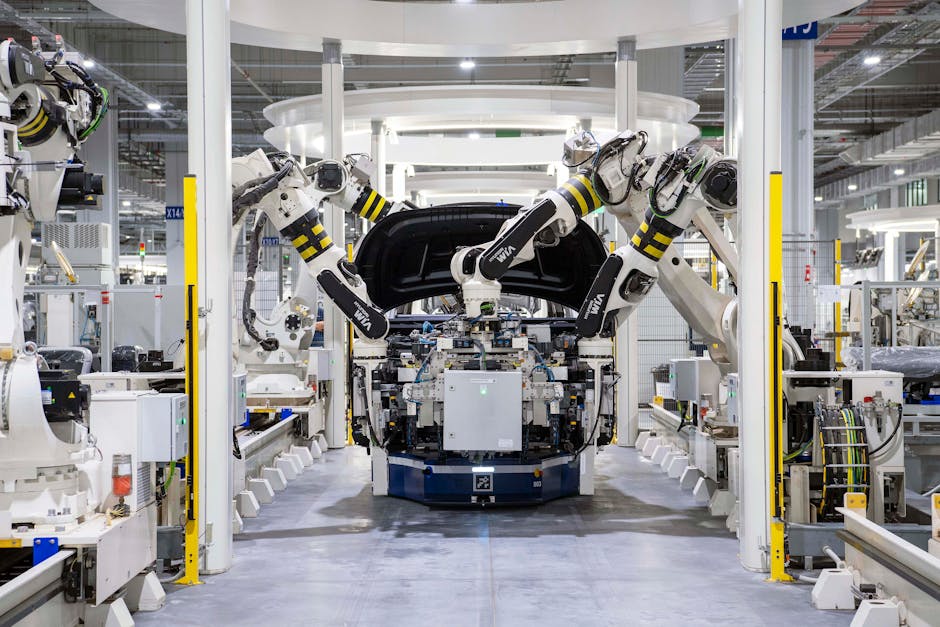
In the mid-twentieth century, the success of an automaker depended almost exclusively on its ability to shape steel and perfect the internal combustion engine. It was a game of heavy engineering, pure physics, and precision mechanics. Whoever mastered machining engine blocks and maximizing fuel burn controlled the world's highways. However, if we look closely at the industry's transformation over recent decades, we notice a subtle yet profound shift in the axis of innovation. The car has ceased to be merely a collection of mechanical parts rolling on four wheels and has transformed into a sophisticated electronic device on axles.
It is right in the middle of this historical transition that a curious move draws attention within Latin America's industrial ecosystem. The announcement of a massive new investment round in the Brazilian automotive sector reveals far more than figures on a balance sheet. It exposes the quiet reconfiguration of the global industry, where legacy Western brands and Eastern tech powerhouses join forces to redefine the future of mobility.
A new capital injection of R$ 2 billion brings the recent investment cycle of a major industry joint venture to R$ 5.8 billion between 2025 and 2027. Yet, the truly fascinating aspect of this narrative lies not in the multi-billion figure itself. It lies in how these corporations have decided to allocate those funds and the strategic location chosen to turn that vision into reality.
The unexpected pairing of European heritage and Asian tech
To understand the scope of this transformation, we must first step back. The automotive industry was long defined by clear geographical boundaries. Western companies designed the models, perfected cabin comfort, and dominated global distribution networks. Meanwhile, Asian hubs focused on scale, cost efficiency, and, more recently, absolute mastery over the supply chain for batteries and automotive software.
For a long time, these two worlds operated along parallel tracks. But what happens when the relentless pace of technological change overtakes isolated strategies? The answer is direct, cross-border cooperation.
The consolidation of a joint partnership formed in late 2025—when the Asian auto group acquired a 26.4% stake in the European manufacturer's Brazilian operations—created a hybrid, highly adaptable business model. The implicit goal is not merely pooling capital, but accelerating the learning curve. On one side stands the established infrastructure, dealer network, and market familiarity of a veteran brand in South America. On the other lies cutting-edge electrification technology and rapid software development.
And that is where the narrative shifts. This is no longer about simply importing finished models; it is a genuine manufacturing symbiosis taking root on local soil.
A flexible factory in the heart of South America
At the manufacturing complex in São José dos Pinhais, southern Brazil, roughly five thousand workers daily witness the birth of this new industrial architecture. The site, which houses two integrated production plants, is being steadily converted into one of the most versatile manufacturing hubs in South America.
Consider the engineering challenge this presents. Historically, assembly lines were fiercely specialized. A plant designed for internal combustion engines struggled immensely to adapt to producing battery electric vehicles. Structural requirements, high-voltage safety protocols, and the physical layout of the conveyor line were fundamentally incompatible.
Today, the facility achieves a remarkable feat: assembling traditional internal combustion vehicles, hybrid systems, and 100% electric models on the exact same line. This adaptability serves as the ultimate insurance policy for automakers navigating the energy transition.
The ability to adjust production to the real-time speed of consumer demand is what separates legacy factories from the industrial parks of the future.
This strategy mitigates the financial risk of maintaining idle facilities should EV adoption proceed at a different pace than forecasted. If the market demands more internal combustion models, the assembly line responds. If the shift toward electrification accelerates, the plant adapts seamlessly without building a new facility from scratch.
Smart platforms and modular architecture
The central technological highlight of this fresh capital injection is the local production launch of an all-new electric model built on a next-generation platform. This modular architecture was engineered specifically for the era of smart, software-defined vehicles.
What does a platform for smart cars actually mean in practice?
In a conventional vehicle, electronic components operate in silos: the braking system has its own control module, engine management runs on another, and the infotainment display operates independently. On a modern electric platform, architecture is centralized. The car operates much like a computer on wheels, where hardware and software are deeply integrated.
This enables the vehicle to receive over-the-air updates, optimize battery consumption in real time, and offer advanced driver assistance features that learn from user behavior. Manufacturing this caliber of technology locally elevates the regional engineering sector from a basic assembly site to a complex technological production center.
The hybrid bridge and the role of biofuels
While Europe and parts of Asia push toward a direct transition to battery-electric vehicles, South America presents a unique and compelling alternative. The existence of an established renewable fuel infrastructure creates a distinct, highly efficient pathway toward decarbonization.
This environment provides the perfect backdrop for hybrid flex-fuel technology, which combines electric power with the flexibility of running on ethanol or gasoline, paired with all-wheel drive. Scheduled for local production in the coming years, this powertrain addresses a practical dilemma for drivers across vast geographical distances.
Why flex-fuel hybrids fit the local landscape
- Charging infrastructure: In remote regions far from major metropolitan centers, fast-charging networks remain sparse.
- Reduced carbon footprint: Ethanol derived from sugarcane or corn boasts a near-neutral lifecycle carbon footprint, matching the ecological efficiency of an EV powered by a fossil-fuel energy grid.
- Extended range: Combining an electric motor with a flexible fuel tank eliminates range anxiety on long journeys.
Nonetheless, automakers recognize that hybrids are only part of the equation. That is why introducing compact urban electric hatchbacks to the local line—with deliveries commencing in the near term—aims to democratize access to zero-emission mobility in congested cities where daily driving distances are short and operating costs per kilometer are paramount.
Economic ripple effects and industrial re-shoring
The decision to pour billions into local automotive manufacturing coincides with global efforts by governments to pull high-tech manufacturing inside their borders. Strengthening the domestic supply chain for electronic components and battery assemblies is viewed as essential for generating high-skilled jobs.
When an automaker injects billions into a manufacturing hub, the multiplier effect ripples across the regional economy. Electronic component suppliers, steel stampers, software developers, and logistics providers feel an immediate lift. Maintaining thousands of direct and indirect manufacturing jobs provides a strong anchor of economic stability.
Furthermore, there is a strategic ambition to transform the facility into an export base for neighboring markets. Latin America as a whole is seeking affordable pathways to modernize its vehicle fleet. If local production achieves competitive cost structures for electric and hybrid vehicles, manufacturing scale will expand significantly, driving down retail prices for domestic buyers as well.
A new chapter for global mobility
Taking a broader view, it becomes evident that the automotive sector is undergoing its most radical transformation since Henry Ford perfected the moving assembly line. The alliance of European heritage and Asian technology on South American soil reflects the reality of a changing global market.
This evolution is about far more than introducing new car models. At stake is how communities will move over the next three decades and the role emerging economies will play in that shift. By integrating smart electric vehicle platforms, efficient flex-fuel hybrid powertrains, and modular manufacturing facilities, the industry takes a decisive step toward cleaner, smarter, and more accessible transportation.
Drivers are beginning to see the real-world benefits of this industrial evolution: quieter, more efficient cars that integrate seamlessly into their digital lives. The future of mobility is no longer a distant theoretical promise; it is being built, piece by piece, on the factory floor.

Automotiveelectric vehiclesrenault geelyautomotive investmenthybrid carssustainable mobilityauto industry
Relacionadas

Entertainment
Neagley Season 2: What Lies Ahead for the Reacher Spin-Off
Explore the future of Neagley Season 2, the plot mysteries behind the Reacher spin-off, and how viewer metrics will determine its renewal.
16 de setembro de 2026

Politics
Alagoas Governor Race: What Drives the Deadlock in Latest Polls
New polling in Alagoas reveals a tight statistical tie for governor. Discover how income, age, and rejection rates shape the electoral battleground.
16 de setembro de 2026

Entertainment
Emmy 2026 Winners: Key Takeaways and Industry Trends
Explore the full list of winners from the 78th Emmy Awards. Discover which drama, comedy, and limited series redefined television excellence.
15 de setembro de 2026

Investing
Where Brazilians Hold R$ 9.1 Trillion and Why They Avoid Risk
Brazilian retail investments reached R$ 9.1 trillion. Discover why high interest rates keep capital in fixed income and how ETFs are signaling change.
10 de setembro de 2026

Movies
New Elon Musk Documentary Explores the Weight of Concentrated Power
Alex Gibney's upcoming documentary on Elon Musk takes a deep look at tech power, political influence, and the complex empire behind the billionaire.
10 de setembro de 2026

Real Estate
How to List Your Home for Rent for Free and Find Tenants Fast
Discover how to list your home for rent for free, reach millions of tenants, and make smart decisions about renting versus selling your property.
09 de setembro de 2026

Real Estate
How Digital Tools Are Transforming Rental Property Management
Learn how modern property management platforms streamline tenant screening, electronic leases, and fast rent collection to reduce vacancy rates.
07 de setembro de 2026
Comments
Loading…