
How to Stand Out at Major Tech Summits and Win Investors
por Morgans · 16 de setembro de 2026 · 6 min de leitura

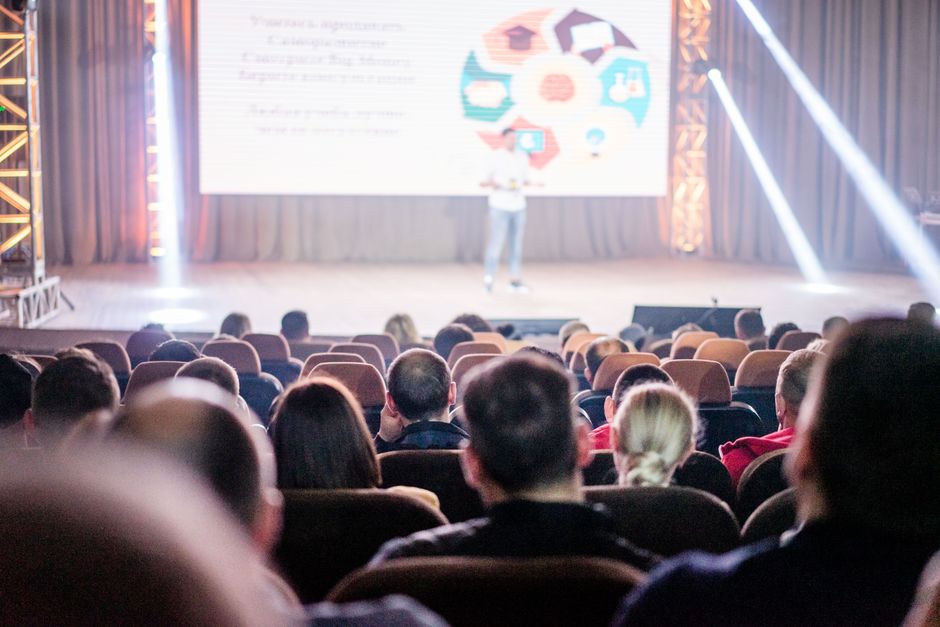
There is a curious phenomenon happening across the global innovation ecosystem. In an era where almost every business meeting can take place over video and founders can raise millions without leaving their desks, major physical tech gatherings remain packed. Not just packed, but fought over inch by inch by those seeking attention in a saturated market.
The explanation for this does not lie in nostalgic nostalgia or the desire to collect business cards. It lies in the physics of human contact. When hundreds of venture capitalists and industry decision-makers gather under one roof, the dynamics of attention shift radically. The digital noise gives way to the urgency of the present moment.
And it is precisely at the center of this dynamic that physical exhibit space transitions from a mere operating expense into a strategic growth lever.
The paradox of physical visibility in the age of algorithms
Over the past decade, most marketing for technology companies has migrated to digital screens. Paid media, automated email sequences, and virtual campaigns became the default standard. However, this ease of access created an inevitable side effect: attention fatigue.
A venture capitalist receives dozens of digital pitch decks every single week in their inbox. The vast majority of these cold outreaches are archived without ever being opened. The digital filter has become so dense that breaking through it requires disproportionate effort.
This is where the paradox of physical presence emerges. When an emerging startup secures an exhibit table at a major tech gathering, it undergoes a silent filter of validation. The act of being physically present signals a baseline level of commitment and maturity that cold emails simply cannot convey.
Physical presence at a major business summit acts as an involuntary credibility filter, separating conceptual projects from real operations.
Furthermore, physical space forces serendipity. The unscripted hallway conversation, the investor who pauses to observe a live demo while walking to a keynote, the corporate partner who spots a brand on event signage — these spontaneous moments are nearly impossible to replicate in a purely virtual environment.
The strategic anatomy of an effective exhibit space
Many founders make the mistake of viewing event participation as a passive exercise. They reserve a space, set up a attractive visual sign, and wait for the crowd to magically swarm them. That is a guaranteed recipe for disappointment.
A functional exhibit table requires surgical execution. When analyzing the standard framework provided at major tech conferences — typically a central table, dedicated floor footprint, branded signage, and staff passes —, we realize that the physical size matters far less than the clarity of the core message.
The goal of an exhibit table is not to close a complex enterprise contract right then and there on the noisy floor. The goal is to spark genuine curiosity in under ten seconds. That is roughly the time a typical attendee takes to walk past your table and decide whether to stop.
Optimizing team dynamics at the booth
Having your team deployed at the event is one of your greatest advantages, but it can quickly turn into a point of vulnerability without clear alignment. The strategic allocation of access passes must match defined business objectives.
- The founder at the core: At least one person with ultimate decision-making authority should be stationed at the table for high-level conversations with VCs.
- Strategic mobility: Not everyone should stand behind the table. Team members ought to circulate through breakout sessions, workshops, and roundtables.
- Active lead collection: Using dedicated lead generation tools prevents losing high-value connections once the floor closes.
When your team divides responsibilities between managing the physical exhibit space and actively networking across the floor, your coverage of the summit multiplies exponentially.
The psychology of decision-making at tech summits
To understand why certain exhibit tables draw constant crowds while others remain empty, we must examine behavioral psychology. Human beings are deeply influenced by social signals, especially in dense, high-pressure environments.
When a passing attendee sees two or three people engaged in an animated conversation around a table, the perceived value of that company jumps instantly. It is social proof operating in real time. Conversely, a booth where staff members are sitting down staring at their phones broadcasts indifference and repels prospective partners.
There is another crucial psychological factor at play: time scarcity. Tech summits operate on tight, demanding schedules. Investors and executives know they have a narrow window of hours to survey dozens of promising opportunities.
And that is where the equation changes.
Aware of this strict time constraint, a founder's verbal pitch must be sharp and immediate. Instead of diving into an elaborate technical breakdown of product architecture, the initial conversation should focus directly on the core problem being solved and the size of the addressable market.
If the attendee shows interest, the immediate objective should be securing a dedicated follow-up meeting, rather than attempting to exhaust the entire business plan on the spot.
Calculating the true ROI of in-person presence
Attending a premier founder gathering requires both capital allocation and team bandwidth. Consequently, evaluating the expected return is an essential step before committing resources.
The cost of securing exhibit space and additional team passes must be weighed against traditional customer acquisition costs or investor outreach expenses. In many instances, a single qualified relationship forged during a two-day event can comfortably cover the entire cost of attendance and travel.
Cost variables and early preparation
Planning early is the most effective method to safeguard your event ROI. The key preparation milestones typically include:
- Capitalizing on early pricing windows: Securing tier-one exhibit packages with early registration savings significantly lowers fixed event overhead.
- Pass optimization: Ensuring that the partner passes included in the package cover key leaders across product, sales, and executive roles.
- Pre-event scheduling: Mapping out target investors and high-value attendees long before stepping onto the convention floor.
Because dedicated exhibit tables at reputable summits are strictly limited and sold on a first-come, first-served basis, acting swiftly gives well-prepared startups a distinct competitive edge.
The day after: where true event value is captured
One of the most frequent point of failure in conference strategy happens in the 48 hours following the event's conclusion. Hundreds of leads are captured, business cards are stashed in backpacks, and due to a lack of immediate follow-up, the momentum dies out.
The post-event workflow must be mapped out before your team even travels to the venue. Every meaningful conversation held at the exhibit table should be documented with specific context — what questions the investor asked, which product feature caught their eye, and what next step was agreed upon.
A tailored email sent within two days of the event, referencing a specific detail from your booth conversation, sets your company apart from the majority of attendees who send generic automated follow-ups.
An exhibit table in a crowded hall is simply the entry point. Turning that fleeting initial interaction into a venture round or a game-changing commercial partnership depends entirely on how rigorously your team executes in the days that follow.
Being present where decisions are made remains, despite all predictions of the digital era, the most reliable shortcut to accelerating a startup's trajectory.

Startup Strategystartup event exhibitiontech summit strategyvc networkingexhibit table ROIstartup marketing strategy
Relacionadas

Startups & Events
Startup Summits: How Smart Founders Maximize Event ROI
Discover how to navigate high-stakes founder summits, connect with top investors, and make the most of curated networking opportunities.
16 de setembro de 2026

Entrepreneurship
How Top Founders Raise Capital and Scale Early-Stage Startups
Discover actionable strategies from top VCs and founders on raising early-stage capital, building high-performing teams, and scaling rapidly.
15 de setembro de 2026

Technology
How Generative Artificial Intelligence Redefined Human-Machine Interaction
Discover how generative artificial intelligence and large language models are transforming modern work, daily communication, and computing.
13 de setembro de 2026

Startups
How Startup Pitch Competitions Uncover the Next Tech Titans
Discover how global startup pitch competitions sharpen founders, signal venture capital, and launch the world's next major technology leaders.
11 de setembro de 2026

Technology
Inside the Hidden Mechanics of Modern Tech Journalism
Discover how specialized tech journalism newsrooms navigate digital security, filter startup innovation, and shape global industry trends.
10 de setembro de 2026
Technology
How the Architecture of Tech Events Drives Startup Deals
Discover how pass structures, networking, and logistics at major San Francisco tech events drive startup success and connect founders with capital.
10 de setembro de 2026

Gaming
New Xbox Game Pass games bring fresh variety to your weekend
Explore the newest games arriving on Xbox Game Pass this week. Discover fresh titles in incremental management, racing, and dice roguelikes.
07 de setembro de 2026

Entertainment
The Hidden Cost of Streaming and Choice Fatigue
Discover how rising subscription fees and infinite content catalogs are redefining our relationship with digital entertainment today.
06 de setembro de 2026

Shopping Guide
The Very Best Labor Day Deals, From Sheets to Eye Cream to Luggage | Reviews by Wirecutter
There is a subtle shift in the air when the last warm days of summer begin to yield to the crisp autumn breeze. It is not merely a change on the thermometer, but a profound psychological transition in
06 de setembro de 2026
Comments
Loading…