
How the New York Stock Exchange Shapes Global Financial Markets
por Morgans · 16 de setembro de 2026 · 6 min de leitura
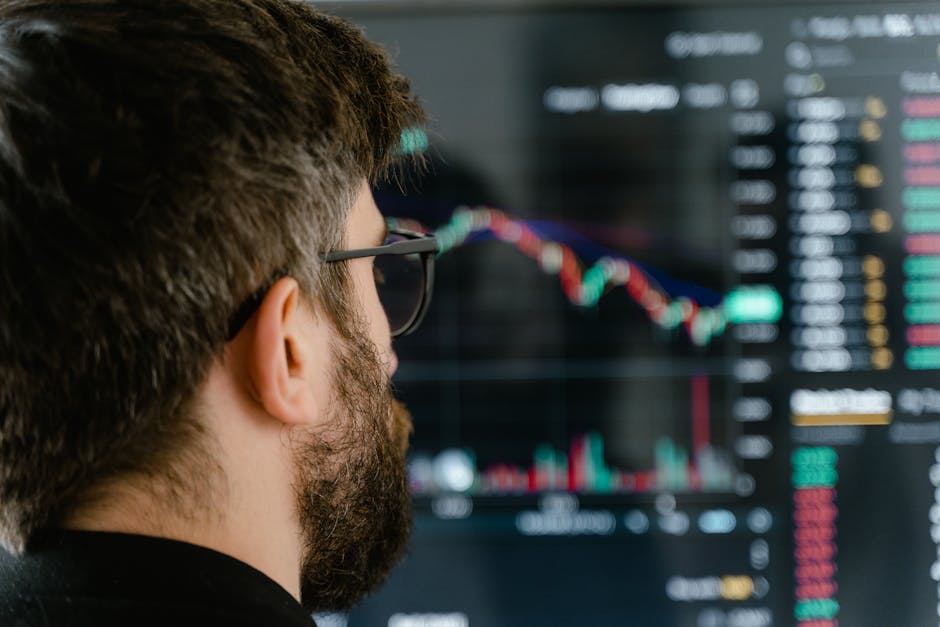
On any given morning in New York, the opening bell echoes through a grand trading hall framed by majestic neoclassic columns. Within seconds, domino effects ripple across Tokyo, London, São Paulo, and Shanghai. This is not merely about buying and selling shares; it is the beating heart of global capital in action.
From a Buttonwood Tree to the Center of the World
In May 1792, a small group of merchants gathered underneath a buttonwood tree in lower Manhattan to establish simple rules for trading financial instruments. At that time, there were no flashing screens, fiber-optic cables, or high-frequency algorithms. There was only an urgent need to build an environment where mutual trust could replace the chaos of informal curb trading.
That initial agreement laid the foundation for what would become the New York Stock Exchange. Over the centuries, the institution grew hand in hand with the broader expansion of global industrialization. What began as an informal outdoor meeting transformed into the premier destination for productive international capital.
The Mechanics of Collective Trust
Financial markets do not operate solely on cold mathematical formulas. They depend, above all else, on human psychology and institutional architecture. When a company decides to list its shares in New York, it seeks more than just funding; it gains global institutional validation.
Deep liquidity attracts even more liquidity, creating a self-reinforcing ecosystem where new information is priced almost instantaneously.
This immense concentration of capital caused the New York market to dictate asset valuations across the entire planet. Yet, this same hyper-interconnectedness comes with an inevitable byproduct: the amplification of systemic crises.
The Scars of 1929 and the Birth of Systemic Risk
To truly grasp the influence of the New York Stock Exchange, one must analyze what happens when the central gears grind to a halt. The late 1920s witnessed unprecedented economic optimism, with everyday citizens and massive corporations operating on heavy leverage under the assumption of endless expansion.
When the bubble burst in October 1929, the shockwaves were hardly confined to Manhattan. The terrifying speed with which panic spread revealed a fundamental truth of the modern era: the American equity market had become the central engine of international finance.
The Ripple Effect on Emerging Economies
As panic gripped the trading floor in New York, international capital flows dried up almost overnight. Nations relying on commodity exports saw their currencies collapse and foreign demand evaporate within a matter of weeks.
The Great Crash of 1929 proved that capital is an exceptionally skittish resource. When investors on Wall Street pull back into safety, the consequences are felt first and most severely across the vulnerable periphery of the global economic network.
The Digital Revolution and the Tech Bubble
By the turn of the twenty-first century, market euphoria returned wrapped in a completely new narrative: the digital revolution. The rise of the commercial internet brought promises that traditional valuation metrics and legacy business models were suddenly obsolete.
Companies with zero history of profits were valued at billions of dollars overnight. The New York Stock Exchange became the primary stage for this speculative frenzy, attracting vast international capital into unproven technology ventures.
The Disconnect Between Storytelling and Fundamentals
The eventual collapse of the dot-com bubble in the early 2000s provided another stark lesson in how stock exchanges function over time. Markets can sustain unrealistic narratives for a brief period, but economic fundamentals always exact their price in the end.
- Compelling narratives quickly attract speculative capital and retail enthusiasm.
- Unchecked euphoria disconnects asset prices from operational realities and underlying cash flows.
- The inevitable market correction resets expectations abruptly across global portfolios.
The post-2000 readjustment proved that even in an economy powered by bits and bytes, the fundamental rules of supply, demand, and cash flow remain supreme.
The Perfect Storm of 2008 and Modern Interconnectedness
If the crash of 1929 was defined by simple leverage and the 2000 crash by tech speculation, the meltdown of 2008 exposed the dangerous complexity of modern financial engineering. Intricate contracts tied to mortgage debt had been packaged and sold to institutions worldwide.
When default rates on domestic real estate began to climb, the epicentre of the financial earthquake was once again Wall Street. Within days, storied investment banks and international funds found their balance sheets severely compromised.
Why the Entire World Feels the Tremors
The rapid transmission of financial distress in 2008 demonstrated how assets traded in New York serve as underlying collateral for global banking operations. When the value of those key assets plunges, margin calls and credit risks escalate instantly across all continents.
When extreme volatility strikes the core of the financial system, capital instinctively flees toward safety, draining liquidity from peripheral markets.
This structural dynamic explains why a downturn originating in a specific credit niche ended up restricting business loans and consumer credit thousands of miles away.
The Physical Trading Floor in an Algorithmic Era
Stepping onto the trading floor in Wall Street today reveals a fascinating paradox. On one hand, ultra-fast computer servers execute thousands of trades in fractions of a millisecond from remote data centers. On the other hand, human brokers wearing iconic colorful jackets still occupy the physical floor.
This coexistence of human intuition and digital speed is far from mere folklore or empty tradition. There is a deep operational reason for preserving a physical floor in an era dominated by automated computer code.
The Value of Human Presence During Market Stress
During periods of extreme market volatility or massive corporate events like initial public offerings, human oversight acts as a vital stabilizer. Floor brokers assist in discovering realistic opening and closing prices based on genuine order flow rather than algorithmic noise.
This hybrid structure adds a crucial layer of resilience to price discovery, preventing pure computational feedback loops from creating chaotic flash crashes.
Reading the Signals from Wall Street
Given this immense historical weight and systemic importance, how should an individual investor interpret the day-to-day movements of Wall Street? The answer lies in treating the New York Stock Exchange as a real-time barometer of global sentiment rather than just a collection of stock quotes.
Monitoring capital flows in New York allows investors to anticipate shifts in interest rates, risk appetite, and international capital allocation.
And that is where the perspective changes for anyone building a long-term strategy. Ignoring the pulse of Wall Street is like trying to navigate open waters without paying attention to the tide.
Practical Lessons for Navigating Global Markets
To convert these insights into an actionable investment mindset, keep these core principles in mind:
- Treasury yields and equity valuations in New York set the base benchmark for the global cost of capital.
- Risk-off sentiment in major US exchanges typically strengthens the reserve currency while putting pressure on emerging markets.
- Sector shifts leading market rallies in New York frequently highlight structural transformations across the global economy.
Understanding the inner workings of the New York Stock Exchange means understanding the invisible machinery of modern capitalism. Far more than a trading venue, it remains the ultimate arena where global expectations for the future are continually weighed, priced, and redefined.

Relacionadas
Investing
Nasdaq: how an electronic experiment reshaped global investing
Discover how the Nasdaq stock exchange pioneered electronic trading, attracted tech giants, and transformed how global markets operate today.
16 de setembro de 2026

Investing
Real Estate Funds: How to Build Wealth with Property Assets
Explore how real estate investment funds work, compare equity versus debt assets, and learn how to generate passive income from property.
15 de setembro de 2026
Investing
How ETFs Rewrote Financial Rules and Why Investors Choose Them
Discover how ETFs work, why passive index investing outperforms active stock picking, and how to build long-term wealth with exchange-traded funds.
15 de setembro de 2026

Investing
How BDRs Allow Global Stock Trading Directly on the B3
Discover how Brazilian Depositary Receipts work, their different structures, and how investors gain global exposure through local exchanges.
13 de setembro de 2026
Economy
How Foreign Exchange Rates Shape Your Daily Purchasing Power
Understand how foreign exchange rates and dollar fluctuations impact the global economy and your wealth. Learn smart hedging strategies.
10 de setembro de 2026
Investing
How to Read Stock Market Gainers and Losers Without Losing Control
Learn how stock market gainers and losers work, filter out short-term market noise, and make smarter, long-term investment decisions.
10 de setembro de 2026

Investing
How to Filter Market Noise and Build Lasting Wealth
Learn how to organize your financial decisions, evaluate dividend income, and build a resilient portfolio without getting lost in daily market volatility.
09 de setembro de 2026
Investing
Day Trading or Dividends: How to Choose the Best Strategy
Discover the key differences between day trading and dividend investing, the psychology behind each approach, and how to build a lasting portfolio.
07 de setembro de 2026

Investing
How to Choose Investments When Facing Options Overload
Learn how to choose investments with clarity, cutting through market noise to build a sustainable long-term financial portfolio.
07 de setembro de 2026
Investing
How to Beat the Stock Market with Long-Term Investing
Discover a proven stock selection methodology focused on deep research, long-term holding, and beating market indexes consistently.
06 de setembro de 2026
Comments
Loading…