
AI digital clones unlock new business model for online creators
por Morgans · 18 de setembro de 2026 · 6 min de leitura

For centuries, the knowledge and influence economy has run up against an insurmountable biological barrier: the limitation of time. A brilliant professional or a celebrity with millions of followers can only be in one place at a time. Even though the internet allowed broadcast messages to reach massive audiences instantly, individual interaction remained bound to human scale.
On social media, this limitation produces a curious phenomenon. The direct message inboxes of major public figures have become digital graveyards of unmonetized attention. Thousands of questions, advice requests, and connection attempts arrive daily, but the vast majority remains unread simply because there are not enough hours in any day to answer everyone.
Now, a new wave of artificial intelligence platforms promises to solve this bottleneck. By investing millions into specialized machine learning architectures, technology entrepreneurs are building virtual replicas of influencers and experts. It marks the rise of digital clones trained to mirror the voice, knowledge, and behavioral nuances of real human beings.
The invisible bottleneck of the attention economy
To understand the drive behind this movement, one must examine how the digital content business has operated until now. Online creators build massive audiences, yet their primary revenue model still relies on temporary brand sponsorships. The influencer rents out audience attention to a corporate buyer. It is fundamentally a passive consumption model.
However, modern followers do not merely want to watch pre-recorded videos. They often seek direct engagement, answers to specific questions, or personalized advice. How can creators satisfy this demand without driving their schedules into logjam? The technology industry's answer is positioning interactive AI directly in the middle of the equation.
Through interactive text or video interfaces, followers can now converse directly with a digital version of that individual. The system operates uninterrupted, twenty-four hours a day, seven days a week. And from a business standpoint, every interaction can be monetized.
The true shift lies not just in generating content, but in allowing anyone to purchase a fractional unit of direct personal engagement.
This dynamic fundamentally shifts industry incentives. Instead of depending exclusively on marketing budgets, creators unlock recurring revenue streams funded directly by their most dedicated audience members.
The engineering required to build a digital twin
Creating a truly convincing digital clone requires far more than feeding raw text into a generic language model. Prompting a standard chatbot to act like a famous personality almost always yields superficial and synthetic responses.
Achieving high-fidelity replicas demands a rigorous data engineering process. Technical teams gather the complete public footprint of an individual, including recorded interviews, videos, books, articles, and podcast appearances.
This data is compiled into a detailed behavioral dossier. The file outlines the individual's psychological profile, speech mannerisms, worldview, and a comprehensive analysis of their strengths and limitations. The creator then participates in extensive testing sessions with developers to fine-tune the system's responses.
In one project managed by industry founders, a well-known reality television winner spent hours in structured interviews dedicated solely to calibrating the underlying model. The goal was establishing clear rules regarding how the digital avatar thinks, communicates, and what topics it must avoid entirely.
Fractionalized knowledge and the minimal sellable unit
While entertainment offers the most visible entry point for this technology, the most profound economic disruption lies in professional services. Consider the traditional structure of hiring high-level expertise, such as a specialized tax attorney or commercial consultant.
Currently, the smallest unit of sale for these professionals is typically a full hourly rate or a formal consultation fee. If a small business owner has a single question that takes two minutes to address, they must still pay for a full hour of billable time. This economic friction prevents millions of micro-transactions from ever occurring.
Artificial intelligence makes it possible to break these services down into tiny fractions, creating what economists refer to as the minimal sellable unit. Rather than purchasing a full hour of consultation, a client buys a token granting access to a single, hyper-focused answer.
If a user needs clarity on a specific legal regulation or corporate tax rule, they can consult the avatar of a renowned professor for a fraction of the traditional cost. The expert, meanwhile, monetizes their specialized knowledge at a scale impossible to achieve through physical hours alone.
Entertainment as an adoption runway
There is a notable difference in how artificial intelligence business models deploy across different global regions. In traditional tech hubs like Silicon Valley, companies often focus heavily on enterprise productivity and corporate utilities from day one.
However, in markets driven by strong creator cultures and high social media engagement, the most effective go-to-market strategy begins with entertainment. Partnering with recognizable public figures—such as professional fighters, television personalities, and major creators—provides a powerful engine for early adoption.
Entertainment captures public attention and generates immediate conversation volume. Once users become comfortable conversing with celebrity avatars, transitioning them toward technical clones—such as educators, financial advisors, and legal specialists—becomes far more natural.
After subtracting underlying infrastructure and compute costs, revenues generated by these interactions are typically split evenly between the platform developer and the creator. This revenue-sharing model aligns strategic incentives across both parties.
Digital immortality and ethical boundaries
The expansion of interactive avatars raises fundamental questions regarding human identity, consent, and memory. One of the most complex frontiers is the development of posthumous clones and historical personas.
Platforms are already exploring digital replicas of historical thinkers such as Sigmund Freud or Albert Einstein. By ingesting the vast written legacy left by these figures, the system reconstructs their analytical style to offer simulated conversations to modern users.
Yet the technology goes beyond ancient history. Developers have begun exploratory discussions with families of recently deceased individuals to evaluate creating posthumous digital avatars. The objective is utilizing personal writings, voice recordings, and videos to maintain an interactive memorial of a loved one.
The ability to interact with digital replicas of those who have passed introduces uncharted emotional and ethical territory for society.
This application demands extreme caution. The boundary between a meaningful tribute and an insensitive exploitation of grief is incredibly thin, requiring strict ethical guidelines from companies operating in this space.
Reputational risk and algorithmic guardrails
Not every public figure or professional is ready to license their identity and intellectual model to an algorithm. Hesitation among potential partners is rarely about financial viability; it revolves almost entirely around reputational risk.
There is a reasonable fear that a digital twin might hallucinate incorrect information, offer controversial opinions, or make damaging errors. For a professional who spent decades building credibility, an unscripted mistake by an AI could prove disastrous.
To manage this risk, engineers build strict boundary parameters known as guardrails into the software. These constraints prevent the AI from addressing unauthorized topics or straying outside the knowledge domain explicitly approved by the creator.
Furthermore, complete transparency remains essential. Platforms must clearly signal to users that they are interacting with a synthetic intelligence rather than a live human being. Long-term consumer trust relies entirely on explicitly managing expectations from the very first message.
The rise of interactive digital clones represents a permanent shift in how humanity packages knowledge, presence, and personal brand equity. By translating human identity into code, artificial intelligence is redefining the economics of attention, expertise, and digital memory.

Relacionadas
Automotive
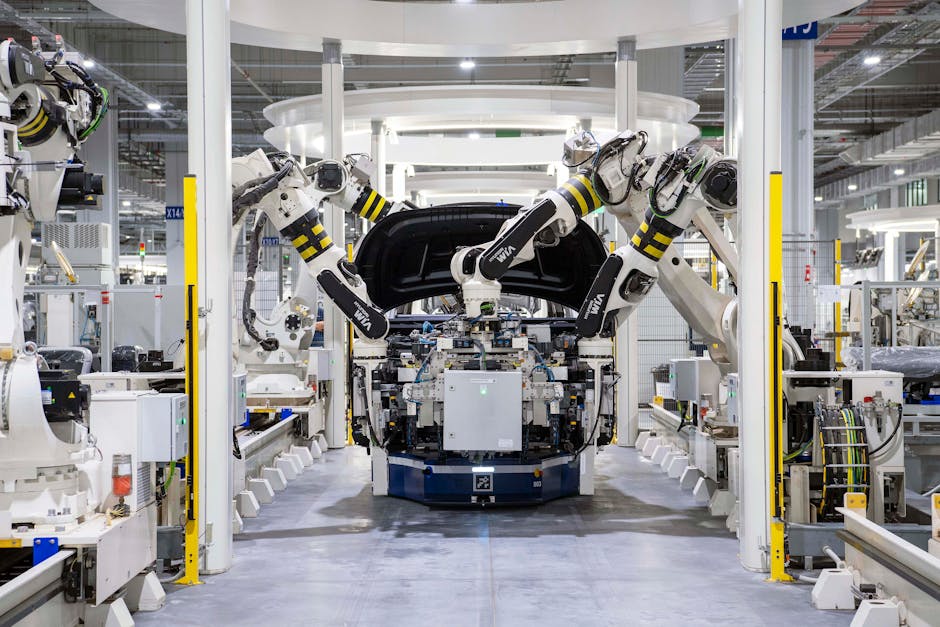
R$ 2 billion investment transforms EV production line in South America
Renault and Geely invest R$ 2 billion in Brazil to build smart electric and hybrid vehicles. Discover how this transforms auto manufacturing.
17 de setembro de 2026

Entertainment
Neagley Season 2: What Lies Ahead for the Reacher Spin-Off
Explore the future of Neagley Season 2, the plot mysteries behind the Reacher spin-off, and how viewer metrics will determine its renewal.
16 de setembro de 2026

Politics
Alagoas Governor Race: What Drives the Deadlock in Latest Polls
New polling in Alagoas reveals a tight statistical tie for governor. Discover how income, age, and rejection rates shape the electoral battleground.
16 de setembro de 2026

Entertainment
Emmy 2026 Winners: Key Takeaways and Industry Trends
Explore the full list of winners from the 78th Emmy Awards. Discover which drama, comedy, and limited series redefined television excellence.
15 de setembro de 2026

Investing
Where Brazilians Hold R$ 9.1 Trillion and Why They Avoid Risk
Brazilian retail investments reached R$ 9.1 trillion. Discover why high interest rates keep capital in fixed income and how ETFs are signaling change.
10 de setembro de 2026

Movies
New Elon Musk Documentary Explores the Weight of Concentrated Power
Alex Gibney's upcoming documentary on Elon Musk takes a deep look at tech power, political influence, and the complex empire behind the billionaire.
10 de setembro de 2026

Real Estate
How to List Your Home for Rent for Free and Find Tenants Fast
Discover how to list your home for rent for free, reach millions of tenants, and make smart decisions about renting versus selling your property.
09 de setembro de 2026

Real Estate
How Digital Tools Are Transforming Rental Property Management
Learn how modern property management platforms streamline tenant screening, electronic leases, and fast rent collection to reduce vacancy rates.
07 de setembro de 2026
Comments
Loading…